Declining light quality subtly changes how customers perceive your products and can impact their purchasing decisions.
LED lighting promised retailers three simple advantages: lower energy use, longer lifetimes, and fewer maintenance headaches. In many ways, it delivered on that promise. Stores upgraded their fixtures, electricity bills dropped, and maintenance teams spent less time replacing lamps.
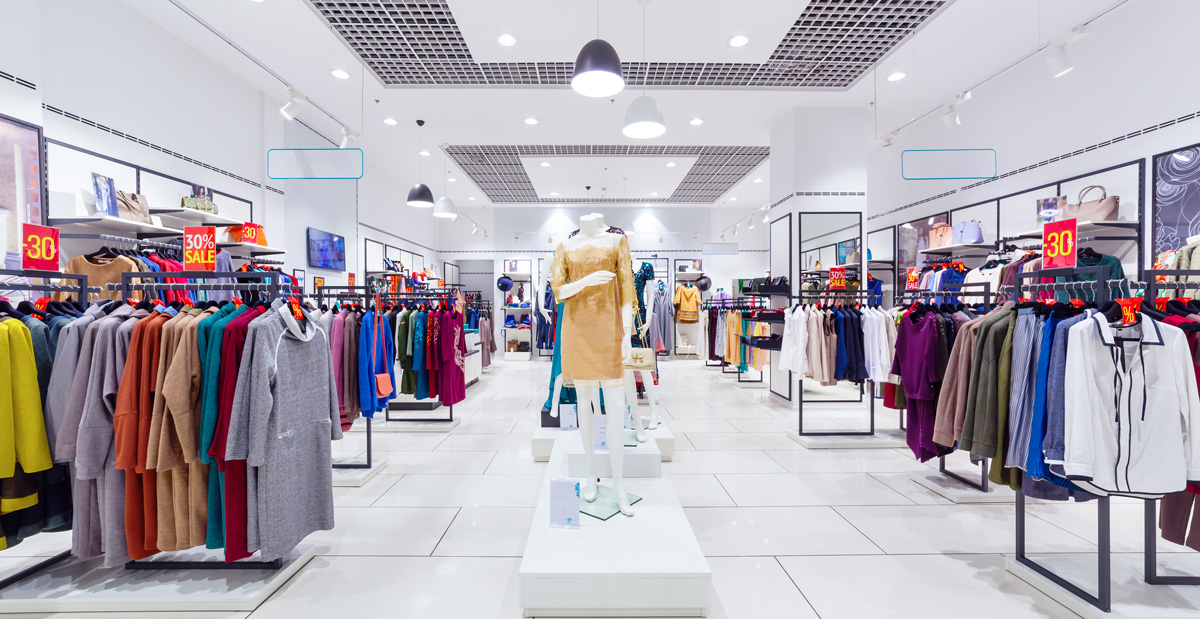
Picture a shopper examining a display of dresses. Under aging LED lighting, a vibrant red gown appears faded and dull. The customer hesitates, questions the garment’s appearance, and ultimately decides not to purchase.
Most stores never noticed the shift. LED lighting systems rarely fail all at once. Instead, performance declines slowly over time. The real question for retailers is not whether the lights are working, but whether the lighting quality in the store is good enough for the customer experience.
Why Should Retail Lighting Performance Be Measured Over Time?
Assessing retail lighting performance requires more than simply turning on fixtures. Ongoing measurement and verification are necessary to maintain an optimal shopping environment. Continuous monitoring ensures several key conditions are met:
- Foot-candle levels stay within merchandising standards.
- Light uniformity across aisles and displays remains consistent.
- Degradation is identified before it begins affecting revenue.
Without proper measurement, lighting performance can decline unnoticed. Store teams may gradually adapt to dimmer conditions, allowing poor lighting to become the norm. This weakens product presentation and can negatively affect sales.
Forward-thinking retailers now manage lighting as they do HVAC or refrigeration systems. Lighting is no longer seen as a static installation, but as an operational system requiring ongoing monitoring and management.
Why Does Retail Lighting Quality Matter As Much As Brightness?
Color Rendering: The Truthfulness of Appearance
While it is often assumed that brighter lighting increases customer engagement and sales, brightness alone does not drive purchasing behavior. Light quality shapes how customers perceive, trust, and desire products. As LED systems age or when lower-quality fixtures are used, several issues may arise.
Even with adequate brightness, the color rendering index (CRI) can deteriorate. When CRI declines or is insufficient from the start:
- Apparel can shift from vibrant to muddy.
- The produce looks underripe or stale.
- Cosmetics lose shade fidelity.
- The store’s decor looks disconnected from the branding standards.
In retail, inconsistency often signals neglect and erodes customer trust. Maintaining lighting standards over time is now a necessity rather than a preference.
Strobing and Flicker: The Invisible Discomfort
Flickering or strobing, often caused by driver performance or aging electronics, is another concern in retail lighting. Customers may not consciously notice flicker, but its effects are significant. Research shows that visible flicker can reduce shopper dwell time and discourage exploration under uncomfortable lighting. These issues can result in:
- Visual fatigue and eye strain during longer shopping visits.
- Product quality is perceived as poorer.
- Negative impressions of the store environment.
- Employee discomfort and reduced productivity
As a result, many retailers now consider no-flicker performance a baseline requirement when specifying lighting.
How Did Retail Lighting Decisions Drift Toward Cost Instead of Quality?
When LED technology was first adopted in commercial applications, lighting professionals spent a great deal of time specifying solutions that focused on:
- Spectral quality
- Visual comfort
- Color accuracy
- Long-term performance
As LED adoption increased, the focus shifted. Procurement teams prioritized efficiency, upfront costs, and capital expenditure avoidance. As decision-making moved from designers and engineers to spreadsheets, lighting quality became less of a priority.
This shift did not occur because the industry intentionally ignored quality. Utilities incentivized energy savings, and budgets required lower costs. Over time, efficiency and quality came to be seen as competing priorities.
Can Retail Lighting Deliver Both Energy Efficiency and High Light Quality?
Today’s LED technology is fully capable of delivering strong performance across multiple categories simultaneously. Modern retail lighting systems can provide:
- High efficacy
- High color rendering
- Tight color consistency
- Low flicker performance
- Long-term lifetimes
The challenge is rarely technological. Lighting consistently shapes how customers see and experience every product. It serves as a silent associate on the sales floor, always present and continually influencing purchasing decisions.
The key difference now lies in how lighting projects are specified and evaluated. When decisions are based solely on lowest cost or fastest ROI, lighting’s positive impact on sales, brand, and customer experience is diminished.
When decision-makers consider broader factors such as merchandise impact, brand presentation, and customer experience, the conversation shifts. Efficiency and experience can coexist in retail environments.
Leading retailers now ask, “What lighting best supports the customer experience while reducing energy use?” rather than simply seeking the lowest-cost option. They recognize that both goals can be achieved together.
Will Retail Lighting Protect The In-Store Experience?
The initial wave of LED upgrades focused on operational savings, with projects justified by energy reduction, lower maintenance costs, and quick ROI. Today, a new generation of lighting specifiers prioritizes the in-store customer experience to drive revenue.
Retailers are recognizing that poor lighting quality can:
- Reduce overall conversion rates.
- Increase product returns due to color inaccuracies.
- Weaken brand perception.
- Lower sales performance.
Lighting is no longer just an overhead expense; it’s shaping how customers experience your brand and influencing revenue.
What Are The Top 3 Best Practices For Maintaining Retail Lighting Performance?
Retailers aiming to improve efficiency, protect brand standards, and enhance customer experience are adopting three key strategies:
- Measure Lighting Performance: Regularly verify foot-candle levels, uniformity, and signs of degradation.
- Specify Quality Alongside Efficiency: Require strong color rendering, tight color consistency, and low flicker performance while maintaining energy efficiency.
- Replace Based on Performance: Upgrade lighting when it stops supporting effective product presentation, rather than waiting for fixtures to fail completely.
Why Retail Lighting Quality Matters
Now more than ever, how customers see merchandise shapes their willingness to buy. Lighting plays a subtle yet powerful role in this process. Gradual declines in lighting quality can affect the customer experience, often without conscious awareness. By closely monitoring and maintaining lighting performance, retailers protect not only energy savings but also the customer experience, turning curiosity into confidence and browsing into purchasing.